





10 Minutes reading time
Keyword cannibalization means that multiple pages on your website target the same keyword, thereby affecting their rankings. This often leads to poorer search results and fewer organic trafficIn this article, you'll learn how to identify keyword cannibalization, what the causes are, and what solutions there are.
Key facts at a glance
- Keyword cannibalization occurs when multiple pages on a website compete for the same keyword, resulting in weaker rankings and reduced organic traffic .
- The main causes of keyword cannibalization are missing Content-strategies and over-optimization, which results in content being published without considering existing pages.
- To avoid keyword cannibalization, precise keyword research and clear URL mapping are necessary, as well as strategies such as 301 redirects and content consolidation to address existing issues.
What is keyword cannibalization?
Keyword cannibalization occurs when multiple pages on a website compete for the same keyword, thereby hurting their rankings and traffic. Imagine that Google has to choose between multiple pages on your website that all target the same main keyword. This competition between pages means that none of the pages can reach their full potential.
The problem here is that Google isn't sure which page is more relevant to a search query, leading to weaker rankings for both pages. Optimizations often have no effect because the pages continue to compete and share their authority. This not only affects rankings, but also a website's visibility and organic traffic.
A differentiated view of the keyword focus of individual pages is therefore necessary in order to avoid clear competition and to achieve the best possible SEOperformance. Keyword cannibalization is therefore a significant problem that requires careful planning and strategy to avoid it and to SEO-Maximize performance.
Causes of keyword cannibalization
The main cause of keyword cannibalization is the lack of a superior content strategy, which involves publishing content without considering existing pages. This results in multiple subpages being optimized for the same keyword, inevitably leading to internal competition and even cannibalization.
Common reasons for keyword cannibalization include ignorance, over-optimization without planning, and a loss of overview with large domains. To clarify this, we'll examine the two main causes—over-optimization and a lack of content strategy—in detail.
Over-optimization
Excessive optimization, also known as keyword stuffing This can lead to multiple pages serving the same keyword, which affects visibility. A classic example of this is when two URLs are visible under the keyword 'winter jackets' in Google. This leads to neither page reaching a top position and the entire SEO strategy: becomes inefficient.
Creating content for keywords without reviewing existing content can also lead to SEO cannibalization. To avoid this, it is important to have a clear keyword strategy and to improve the efficiency of SEO strategy: Carry out a thorough Keyword analysis through and pay attention to the Keyword Density in your SEO copywritingDid you know that with us you can Buy SEO texts can. Have your SEO texts written now.
Lack of content strategy
The lack of a clear content strategy can lead to content being published without an SEO focus. In large companies, it's common for different people to create separate content for similar topics, increasing the likelihood of keyword cannibalization.
In many cases, companies create new content without checking whether existing articles on similar topics rank well. This leads to redundancy and internal competition that can be avoided through coordinated content planning and strategy.
Effects of keyword cannibalization
Keyword cannibalization leads to confusion in Google, leading to a loss of stable positions in search results. When the authority of inbound links is spread across multiple URLs, the website receives conflicting signals, which negatively impacts rankings. A website's authority rating is based on the relevance and quality of its content, which is reduced by keyword cannibalization.
Keyword cannibalization impairs a website's visibility, resulting in a reduction in organic traffic. This negative impact on rankings influences traffic and leads to a decline in conversions. Overall, the negative effects on rankings, traffic, and user experience are significant and should be taken seriously.
Fluctuating SERP positions
An example of keyword cannibalization occurs when a website with extensive content for a key keyword has multiple URLs that constantly change in the SERPs, resulting in unclear rankings. When multiple pages compete for the same keyword, Google may have difficulty deciding which page to rank higher, resulting in fluctuating rankings.
Duplicating content across pages can be problematic for both users and search engines, as it complicates the user experience. Frequent ranking changes can occur when different URLs display similar content for the same keyword, negatively impacting user perception and engagement. Duplicate content can also lead to these issues.
Reduced traffic
Keyword cannibalization can reduce organic traffic because no single page can reach a top position. Marketers often don't realize that their pages are ranking behind competitors for important keywords, which is often due to keyword cannibalization.
Detect keyword cannibalization
An effective tool for detecting keyword cannibalization is the use of SEO tools such as Ahrefs, Semrush or Seobility, which crawl websites and create analytics reports. Analyzing ranking positions is important to determine whether multiple pages are competing for the same keywords; clear indicators include frequent changes between different positions in the SERPs. Furthermore, ensuring that the keywords rank is crucial to increase the visibility of the pages.
Additionally, the Google Site Operator can be used to determine which subpages rank for a specific keyword, helping to identify cannibalization. These tools provide detailed insights into keyword performance, help identify overlaps, and regularly report on keyword cannibalization.
Google Search Console
The Google Search Console allows you to check the indexing and performance of individual pages to determine whether keyword cannibalization is occurring.
If Google classifies a page as not sufficiently relevant, this may be a sign of existing keyword cannibalization.
SEO tools
SEO tools are essential for identifying keyword cannibalization and help improve the performance of to optimize websiteSemrush offers features like position tracking and displays multiple URLs for the same keyword to identify keyword cannibalization. SEO tools are also useful in this context.
Sistrix offers special filters to identify keyword cannibalization and provides recommendations for action to resolve these problems. Ahrefs provides comprehensive insights into keyword performance and helps identify overlaps between pages. Read more about SE Ranking.
Strategies to avoid keyword cannibalization
A precise keyword strategy can prevent pages from competing for the same terms. Having a clear content strategy and planning is important to avoid keyword cannibalization and maximize SEO performance.
Careful keyword research
A careful one Keyword research is crucial to avoid competition between your own URLs. Strategic keyword usage helps to avoid keyword cannibalization. The keyword focus of the pages can be differentiated by focusing on other similarly oriented keywords. Keywords or longtail-search terms.
Identifying keyword trends is crucial to avoiding potential cannibalization. Internal linking can be crucial in signaling to Google the main page for a keyword, which helps avoid cannibalization.
Clear URL mapping
Each URL should be unique and contain clearly defined keywords to avoid confusion. This helps ensure clear keyword alignment and minimize internal competition.
Solutions to Fix Keyword Cannibalization
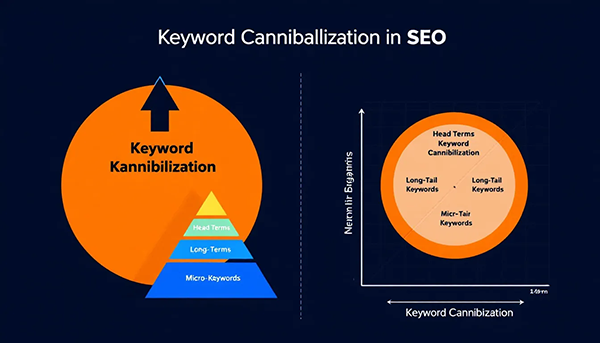
There are several options for quickly resolving minor cannibalization issues. Keyword cannibalization can be resolved by more differentiated content on affected subpages and targeted optimization for other focus keywords.
301 redirects
Weaker pages should be redirected to stronger pages to increase the visibility and traffic of the stronger websites. 301 redirects direct users and search engines from one URL to another and help improve SEO performance.
When using 301 redirects, all internal links updated and URL indexing checked.
Canonical Day
Canonical tags are an important tool for determining the primary URL when multiple cannibalized pages exist. They signal to search engines that one URL should be considered the relevant page, while the content of other pages is considered non-original.
Merge content
Combining content from multiple subpages into a single URL is an effective way to address keyword cannibalization. Consolidating content onto a single page improves relevance and can increase visibility in search engine results.
Content from weaker pages is bundled into a stronger version, strengthening the authority of a single URL and improving SEO performance.
Examples of keyword cannibalization
An example of keyword cannibalization illustrates the problem in the area of clothing sales. When selling 'winter jackets' and 'women's winter jackets,' the texts overlap, leading to keyword cannibalization in the domain space.
To avoid such overlaps, it's important to create clear and distinct content for related keywords. This helps minimize internal competition and maximize SEO performance.
With us you can:
- Buy backlinks
- Have SEO texts created
- Ahrefs ranking improve
- Ahrefs Backlinks order
- Increase domain authority to let
- Wordpress Have a website created
- Buy website traffic
- Have an explanatory video created
We are yours Link building agency for a TOP optimization of your website and high-quality DoFollow Links. Benefit from our Link building agencyWe offer you a complete service from a single source. Order your SEO Packages today in our shop. Now Buy high-quality backlinks for a better ranking on Google.
Summary: Key takeaways about intuitive eating
In summary, keyword cannibalization is a serious problem that can significantly impact a website's SEO performance. It occurs when multiple pages on a website compete for the same main keyword, leading to lower rankings, reduced traffic, and a poor user experience. The main causes are over-optimization and a lack of content strategy.
To avoid and resolve keyword cannibalization, careful keyword research, clear URL mapping, and the use of SEO tools are essential. Targeted measures such as 301 redirects, the use of canonical tags, and content merging can minimize the negative effects. By implementing these strategies, you can increase your website's visibility and achieve your SEO goals.
Frequently Asked Questions
What is keyword cannibalization?
Keyword cannibalization is when multiple pages on a website compete for the same keyword, which can lead to lower rankings and a drop in traffic. It's important to avoid this to maximize the effectiveness of your SEO strategy.
How can you detect keyword cannibalization?
Keyword cannibalization can be detected by analyzing the ranking positions of your pages with SEO tools such as Ahrefs or Semrush and the Google Search Console These methods help identify competing content that ranks for the same keywords.
What impact does keyword cannibalization have on SEO performance?
Keyword cannibalization negatively impacts SEO performance by leading to fluctuating SERP positions, reduced traffic, and a poor user experience. Google's difficulty identifying the most relevant page further exacerbates the problem.
How can you avoid keyword cannibalization?
To avoid keyword cannibalization, it's essential to conduct thorough keyword research and establish clear URL mapping and a coordinated content strategy. This ensures effective keyword usage and improves the visibility of your content.
What are the solutions to fix keyword cannibalization?
To address keyword cannibalization, we recommend using 301 redirects, canonical tags, and merging content from multiple pages into a single URL. These measures help optimize SEO performance and improve visibility.